

Tenant &
Landlord Services
Facing a rental dispute or potential eviction?
We provide free consultations, mediation services, and resources to help resolve conflicts between tenants and landlords in Summit and Wasatch Counties.
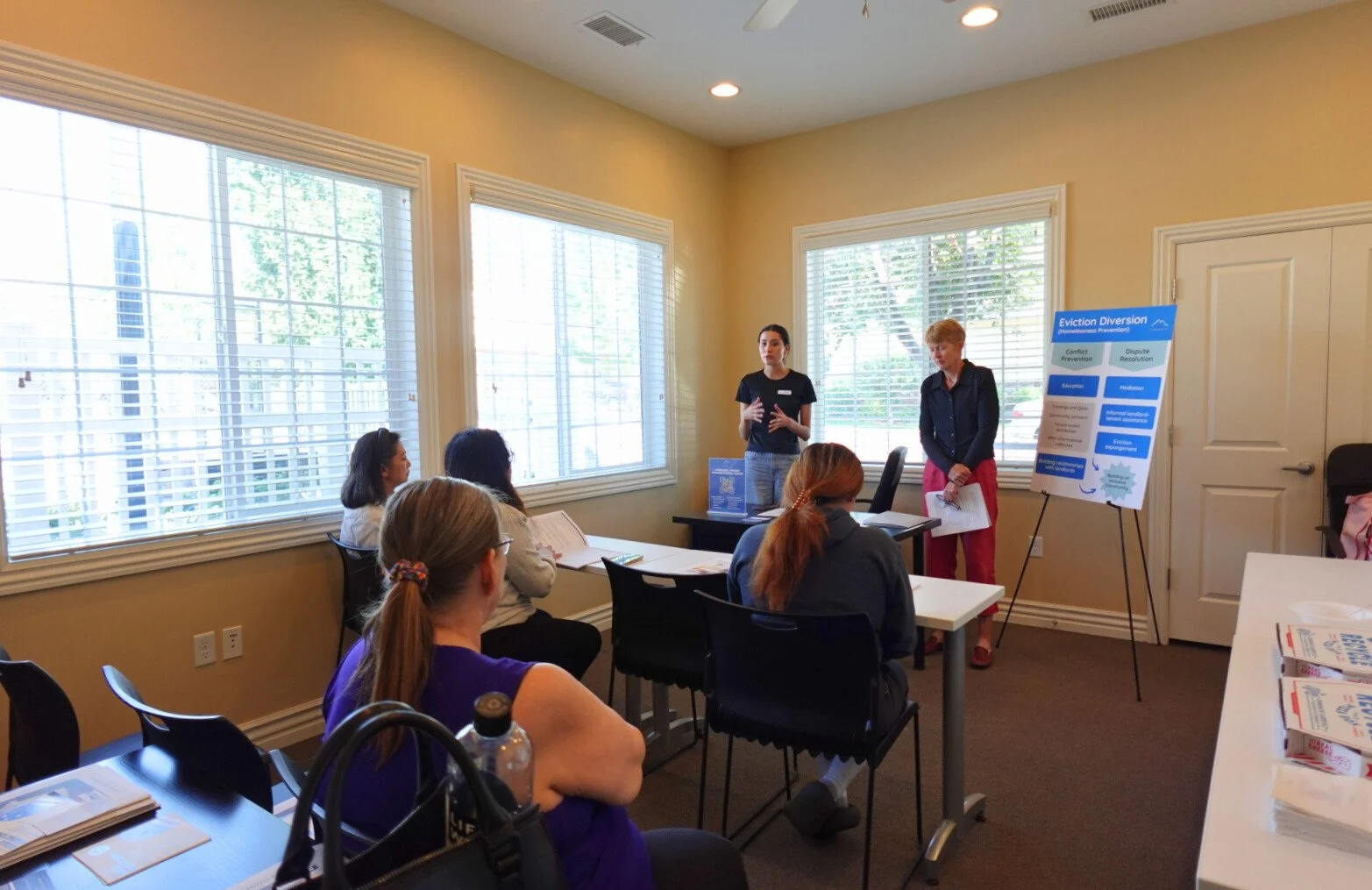
Mountain Mediation possesses a comprehensive eviction diversion program that seeks to reduce the number of landlord/tenant disputes that result in eviction.
A large focus of this programming is community-wide education aimed to stabilize housing and prevent eviction filings. We also provide mediation services to help resolve disputes, of all kinds, between landlords and tenants.
These services are provided at no charge to primary residents of Summit and Wasatch counties thanks to generous support from public and private grants and donations.
Find information below dedication specifically for tenants or landlords.

What is Tenant/Landlord Mediation?
We always encourage tenants and landlords to have a conversation directly with one another before we become involved.
If the issue is not resolved, then we will step in. Those involved in the dispute will meet with a neutral third party – the mediator – who will help facilitate a conversation in an attempt to resolve the dispute.
How does Tenant/Landlord Mediation work?
Once you fill out our intake form, we will follow up with a phone call to see if we can help you.
Scheduling may take up to three weeks. However, 3 Day Pay or Vacate notices take highest priority.
Mediation services can be provided in person or virtually via Zoom.
We require all parties to save up to three hours of their time to ensure a focused and productive conversation.
Common Issues We Help Resolve:
The specific issues vary from mediation to mediation will be identified prior to the commencement of the mediation. Issues may include:
Repairs, inspections, and security deposit
Payment plans (including Satisfaction of Judgements)
Move out plans
Improvement of communication between landlord and tenant
Things to know about our mediations:
Mediation is voluntary and confidential
A Mediator/Intake Coordinator does not provide legal advice to any party
Our Mediator/Intake Coordinator do not side w/ any party

If You’re a Tenant
Worried about eviction? Having issues with your landlord? We can help.
Common Situations We Help With:
Repair and maintenance disputes
Security deposit disagreements
Lease violations or misunderstandings
Eviction notices
Communication breakdowns with landlords
Free Download - Tenant Tool Kits:
Download this FREE Tenant Tool Kit in English or Spanish.
If you need a physical copy, you can visit our office.
What We Offer:
Free 15-minute consultation to discuss your situation. These are offered every 1st and 3rd Tuesday of the month, from 2-5pm (via phone). More time slots are coming soon!
Help understanding your lease and tenant rights
Mediation to resolve disputes without going to court
Reduced fees available based on financial need
Resource Videos
Free information and materials for tenants and landlords, including mediation and rental checklists, plus our entire renters video library available in both English and Spanish.
You can also view our entire video library on our YouTube Channel.
English Videos
Spanish Videos

If You’re a Landlord

Dealing with a difficult tenant situation? Mediation can help you resolve conflicts while avoiding costly legal processes.
Common Situations We Help With:
Non-payment of rent
Property damage disputes
Lease violations
Communication challenges with tenants
What We Offer:
Professional mediation services
Help reaching mutually acceptable solutions
Faster resolution than court proceedings
Preservation of tenant-landlord relationship when possible
Still have questions? Take a look at the FAQ or reach out anytime. If you’re feeling ready, go ahead and schedule a mediation.
Frequently Asked Questions
-
We provide three core services: mediation and conflict resolution for family, neighbor, workplace, and community disputes; eviction prevention and tenant-landlord mediation to help resolve rental conflicts and keep people housed; and Let’s Talk℠ communication trainings that teach effective dialogue and conflict resolution skills for individuals and organizations. All services are provided by trained mediators in a confidential, neutral environment.
-
We serve anyone in Summit and Wasatch Counties, Utah who is experiencing conflict or wants to build communication skills. This includes individuals and families navigating disputes, tenants and landlords facing rental conflicts, organizations seeking team training, and community members wanting to learn better conflict resolution skills.
We offer services at reduced fees for clients with financial needs—no one is turned away due to inability to pay.
-
Yes. Mountain Mediation is a 501(c)(3) nonprofit community organization (EIN: 43-2049676). We’re supported by grants, donations, and service fees on a sliding scale to ensure everyone has access to conflict resolution services regardless of financial situation. Your donations help us provide free and reduced-fee mediation to families and individuals in our community.
-
Yes. Our fees help us provide affordable mediation to the communities we serve. We charge a $35 intake fee per party for all types of mediation, which helps ensure both sides are committed to the process. Mediation costs $180 per hour, usually split between the two parties.
However, financial assistance is available, and each party is assessed individually.
-
Fill out our intake form or call us at (435) 336-0060. We’ll review your situation and contact you within 2-3 business days. We’ll match you with the right services and schedule your first session. Most cases begin within 1-2 weeks of intake.
Our free 15-minute renting consultations are available every 1st and 2nd Tuesday of the month, 4-5pm. -
Parties meet with the mediator and issues are discussed with an eye toward mutual agreements on resolving the issue(s). Mediations will either be held with all parties in the same room or in separate spaces.
-
It means that whatever you say in mediation (whether it is when you and the mediator are talking alone, or when you and the other party are talking with the mediator), will not be repeated outside the mediation by the mediator or any party present. If the mediation is not successful and you go to court or another legal proceeding, the mediator cannot be subpoenaed or required to testify in court, nor can any/all records or paperwork from Mountain Mediation be used in the court proceeding.
Parties are encouraged not to share information discussed during mediation outside of the mediation, and bringing up these details in front of a judge is frowned upon. This confidential space allows greater transparency during the mediation from all parties increasing the chances of a mutually acceptable resolution.
-
That both parties must agree to mediate. If one party does not want to participate, then the mediation cannot occur. Either party or the mediator may end the mediation at any time, for any reason.
-
If you and the other party are unable to come up with an agreement in mediation, then you can take other action such as filing a claim in court (or return to court if you have already initiated a complaint) or take the matter to arbitration. That is your choice. The mediator will not tell you what to do. The mediator does not provide legal advice or encouragement to either party.
-
Mediation gives you and the other party the chance to resolve the dispute yourselves. Most people are more satisfied with resolutions that they develop themselves. In general, mediation is less costly and faster than arbitration or litigation.
-
You may bring your attorney to the mediation, but counsel is not required. If your attorney does not participate and a written agreement is created during the mediation process, you may take the agreement to your attorney for review, before it is finalized. You may also contact your attorney via telephone at any time during the mediation. Mediators do not provide legal advice or encouragement to either party.
-
We suggest allowing up to 4 hours for mediation. This time may be shorter, or additional sessions may be needed. Being prepared for your mediation with relevant paperwork and an understanding of the issues increases productive use of time
-
Mountain Mediation is fortunate to work with professional and court-qualified mediators who volunteer their services for many of our programs. Our mediators have completed specialized training and have significant mediation experience.
-
The mediator may provide a written summary of agreements reached in mediation. This could be prepared during the process while parties wait, or prepared later and sent to the parties and their attorneys. This summary is not the legal document that would be filed for a divorce or modification. If a legal document is needed, then the mediator should initiate discussion during the session about how a legal document would be prepared and filed with the Court.
-
If there is an existing protective order or stalking injunction involving you and another party in the dispute, you will need to provide a copy of this document to Mountain Mediation.
Unless the protective order allows you to meet in mediation with the other party, you will need to modify the order before Mountain Mediation can schedule the mediation. The modification will not change the terms of the protective order other than allow you to participate in mediation.

How Does Mediation Work?
Step 1: Intake
Contact us through our intake form or call. We’ll discuss your situation and determine if mediation is appropriate.
Step 2: Scheduling
We’ll match you with a mediator and schedule your session (typically within 1-2 weeks).
Step 3: Pre-Mediation
Your mediator may speak with each party separately to understand the issues and prepare for the session.
Step 4: Mediation Session
Meet with your mediator (in-person or virtual) to discuss the conflict and work toward resolution. Sessions typically last 2-4 hours.
Step 5: Agreement
If you reach an agreement, we will assist you in documenting it.